
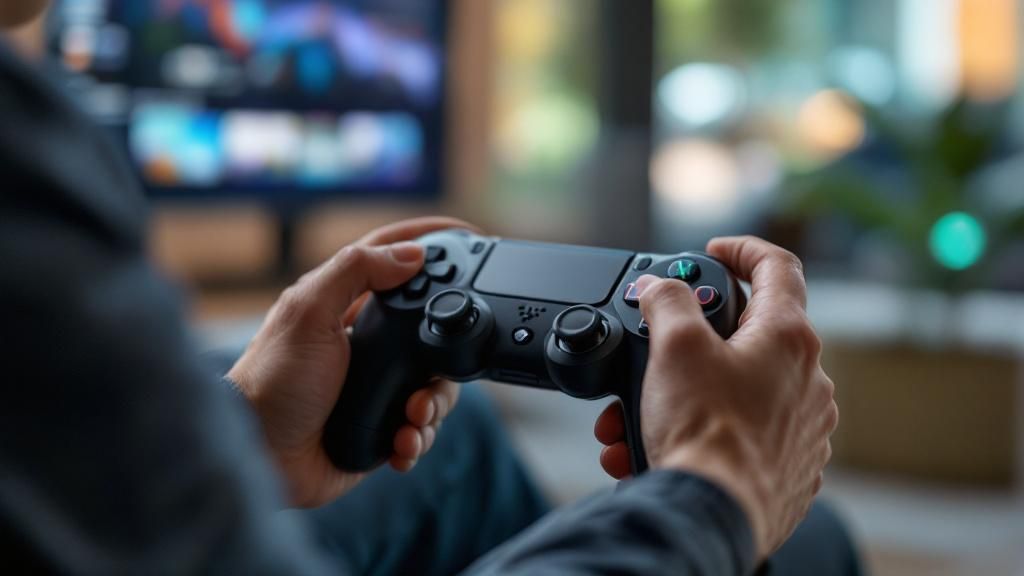
Microsoft has repeatedly demonstrated its focus on inclusive gaming by unveiling cutting-edge controller capabilities carefully crafted to support players with multiple adaptive needs. These new features promise to reshape the play experience for those experiencing movement restrictions, offering adjustable control options, responsive controls, and advanced software connectivity. This article examines the transformative technology behind these advancements, assesses how they support gamers of different skill levels, and discusses the larger significance for the gaming industry’s accessibility requirements.
Innovative Approach for Accessible Gaming
Microsoft’s latest controller innovations represent a considerable milestone in accessible gaming technology. The design philosophy emphasises customisation, allowing players to modify buttons, triggers, and analogue sticks according to their individual requirements. These responsive features accommodate users with varying degrees of mobility, dexterity challenges, and sensory requirements. By integrating feedback mechanisms and ergonomic considerations, Microsoft has created a controller that meets diverse physical needs. The device’s adaptable design enables straightforward customisation without requiring technical expertise, expanding access to gaming for millions of players worldwide.
The comprehensive design transcends physical modifications to incorporate advanced software integration. Microsoft’s adaptive algorithms learn individual player preferences, automatically optimising control schemes based on usage patterns and feedback. This adaptive personalisation ensures that each gamer enjoys maximum performance suited to their unique abilities. The controller’s support for existing Xbox and Windows gaming platforms maximises accessibility reach, overcoming barriers that historically excluded countless individuals from mainstream gaming experiences. Such forward-thinking engineering reflects Microsoft’s committed dedication to building genuinely welcoming entertainment ecosystems.
Key Accessibility Features and Functions
Customisable Button Mapping and Control Configuration
Microsoft’s latest controller advancement presents advanced button reassignment capability that enables users to customise their control scheme according to individual requirements. Players can now reassign any button to execute alternative functions, accommodating those with reduced motor control or specific motor control challenges. This adaptability extends beyond traditional gaming, enabling users to optimise their performance across various applications and devices. The intuitive setup menu guarantees that even those unfamiliar with complex options can navigate customisation with ease, democratising accessibility across the player base.
The adaptive trigger technology represents a significant leap forward in tactile feedback customisation. Users suffering from hand tiredness or grip-related difficulties can modify trigger responsiveness and resistance settings to accommodate their physical limitations. This feature offers considerable benefits for prolonged gaming periods, reducing strain whilst maintaining responsive gameplay. Furthermore, the controller’s software permits simultaneous configuration of various profiles, enabling rapid switching between different game requirements without manual recalibration between sessions.
Ocular Tracking and Voice Control Implementation
Microsoft has added advanced eye-tracking capabilities, allowing players with pronounced physical constraints to control gameplay through visual focus alone. This groundbreaking innovation employs sophisticated camera technology to detect gaze patterns with remarkable precision, translating visual focus into actionable game commands. The system recognises individual eye patterns and compensates for inherent differences, ensuring consistent accuracy throughout lengthy gameplay. This transformative system fundamentally transforms gaming accessibility for individuals with reduced motor control or paralytic disorders.
Working with eye tracking, the controller now features robust voice command integration, enabling hands-free operation through recognition of natural language. Players can activate abilities, move through menus, and coordinate with teammates entirely through spoken instructions. The system supports multiple accents and speech patterns, utilising machine learning algorithms to improve recognition accuracy over time. This dual-modality approach ensures that individuals with diverse accessibility needs can opt for their preferred interaction method, optimising comfort and control.
Tactile Response Configuration and Sensory Adjustment
The enhanced haptic feedback system offers detailed control over vibration amplitude, frequency, and duration, accommodating users with varying sensory sensitivities. Players can customise haptic responses for individual actions, confirming vibration patterns enrich rather than distract from gameplay. This proves essential for individuals with sensory processing difficulties, enabling them to experience immersive play without intrusive stimulation. The customisation covers auditory cues, which can be modified or substituted with visual cues for those with hearing difficulties.
Microsoft’s devotion to sensory inclusivity includes cutting-edge accessibility options for colour-blind players and those with visual perception difficulties. The controller functions with sophisticated display settings that alter on-screen colour palettes and contrast levels without compromising aesthetic quality. Additionally, the system supports different feedback systems, including tactile patterns that convey information typically conveyed via visual or auditory means, ensuring thorough sensory accessibility across all gaming experiences.
Impact on the Gaming Sector
Microsoft’s accessibility-driven controller advancements have substantially reshaped the gaming landscape, enabling millions of players formerly shut out from mainstream gaming to participate fully. The introduction of customisable controls and flexible functionality has made gaming more accessible, allowing individuals with varying physical abilities to enjoy titles alongside their peers. This technological advancement has prompted other industry leaders to reassess their inclusive approaches, creating a ripple effect throughout the sector. The controller’s success illustrates that accessible design isn’t merely a business obligation but a economically sound approach that broadens audience appeal significantly.
Beyond business considerations, these controller advancements have created a more accepting gaming community defined by authentic inclusion. Disabled gamers now experience fewer obstacles, enabling them to forge genuine relationships through shared gaming experiences. Online communities have thrived, with players exchanging customisation tips and recognising their recently developed abilities. Microsoft’s initiative has successfully transformed industry perception, establishing accessibility as a core design value rather than an secondary concern. This perception change promises enduring advantages, inspiring developers to focus on accessible design in upcoming gaming products.
